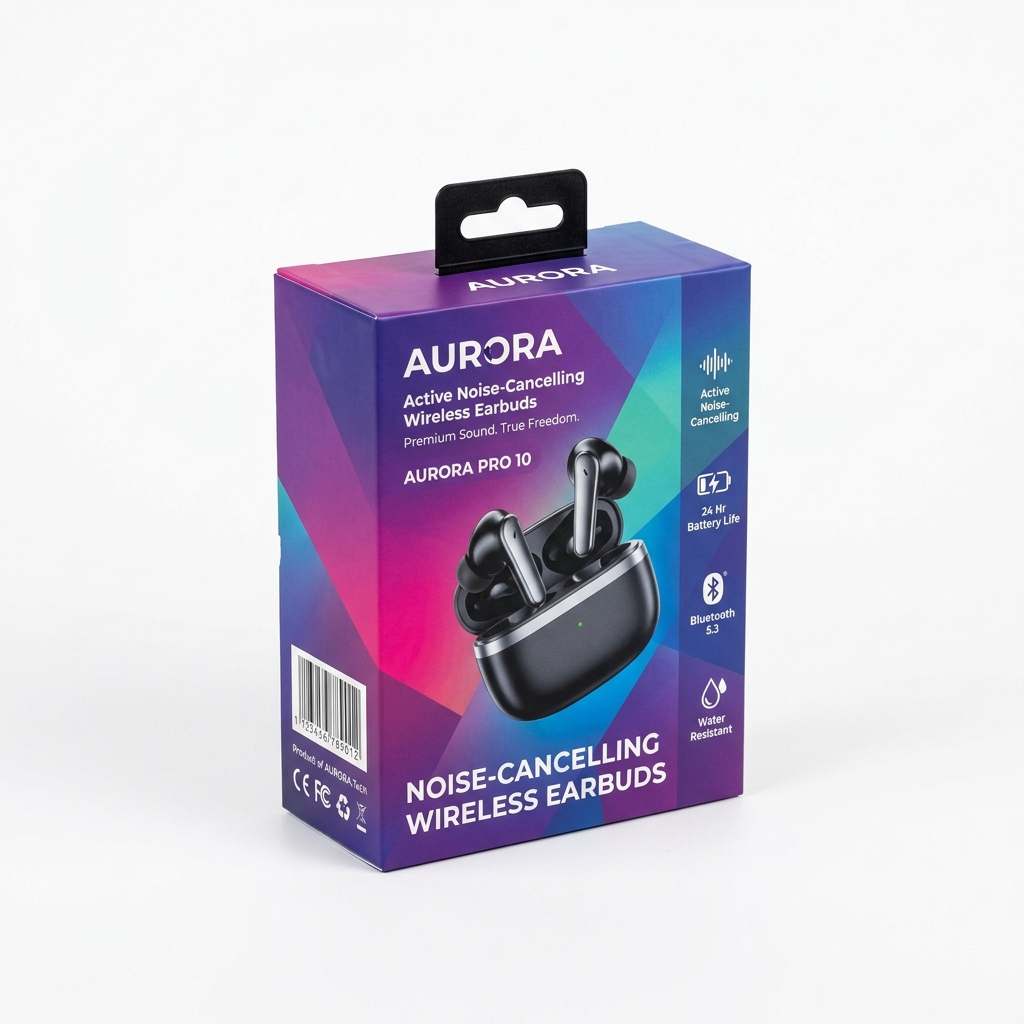
Digital vs Flexo vs Offset: Box Printing Cost by Volume
Plate costs and click charges decide which box printing process is cheapest for your run. Here is where the crossover points actually sit.
Two boxes with identical artwork can differ in price by a factor of three depending on how they are printed. The process is not a quality decision so much as a volume decision, and getting it wrong in either direction is expensive.
Here is how the three processes behave, and where the crossover points sit.
The core economics
Every printing process has a fixed setup cost and a variable per-unit cost.
- Digital has essentially no setup and a relatively high per-unit charge.
- Flexographic has a plate charge per colour and a low per-unit charge.
- Offset litho-lamination has a higher plate and make-ready charge and the lowest per-unit charge of the three at scale.
Plot those as three lines and you get two crossover points. Below the first, digital wins. Between them, flexo wins. Above the second, offset wins. Everything else in this article is detail about where those lines cross for real jobs.
Digital printing
No plates. Artwork goes straight from file to press, which means 100 boxes costs the same per unit to set up as 1,000. It handles full CMYK photography, and because there is no plate it can print a different design on every box in the same run — genuinely useful for versioned, seasonal or personalised packaging.
Where it wins: runs under roughly 2,000–2,500 units, multi-version artwork, prototypes and first orders, and any job where you want to test three designs before committing to one.
Its limits: per-unit price does not fall much with volume. Very large solid areas of a single colour can show banding on some presses. Spot and metallic inks are usually simulated in CMYK rather than laid down as real inks, so an exact Pantone match is harder.
This is the process behind almost all low-minimum packaging, including our small business packaging range.
Flexographic printing
Rubber plates transfer ink directly onto the corrugated liner. Each colour needs its own plate, so a two-colour logo costs two plates and a five-colour design costs five. Plates are a one-time charge and are retained for reorders.
Where it wins: corrugated runs from roughly 2,000 units upward with one to three spot colours. It is the standard for shipping boxes, corrugated cases and pizza boxes — anything where a clean logo on kraft beats photography.
Its limits: fine gradients, small reversed-out type and photographic images do not hold well. The rubber plate squashes slightly under pressure, which spreads dots — expect noticeable dot gain, particularly on uncoated kraft. White text below about 7 pt tends to fill in.
Offset litho-lamination
The artwork is offset-printed on a paper sheet at very high resolution, then that printed sheet is laminated onto the corrugated board. You get magazine-quality print on a structural box.
Where it wins: above roughly 2,500 units when photographic quality matters — retail product boxes, display packaging, premium folding cartons and the printed wraps on rigid boxes.
Its limits: plate and make-ready costs are the highest of the three, and lamination adds a production step, so lead times run longer. It is genuinely wasteful below its crossover point.
Where the crossovers sit
These are working numbers, not laws of physics — the exact point moves with sheet size, colour count and how well the blank nests.
| Run size | Corrugated, 1–2 colours | Corrugated, full colour | Folding carton, full colour |
|---|---|---|---|
| 100–500 | Digital | Digital | Digital |
| 500–2,500 | Digital or flexo | Digital | Digital |
| 2,500–10,000 | Flexo | Litho-lamination | Offset |
| 10,000+ | Flexo | Litho-lamination | Offset |
The useful habit is to ask for the quote both ways at the boundary. At 2,000 units of a two-colour mailer the digital and flexo numbers are often within a few percent, and the deciding factor becomes lead time or whether you expect to reorder — because a plate you pay for once gets cheaper every time you reuse it.
Colour matching across processes
A Pantone reference is a physical ink standard, not a screen colour. How closely you can hit it depends on the process:
- Offset with a real spot ink is the most accurate. This is what you specify when brand colour is non-negotiable.
- Flexo with a spot ink is close, with more dot gain. Ask for a draw-down on your actual board.
- Digital simulates the colour in CMYK. Most Pantones land close; saturated oranges, deep blues and metallics are the usual problem cases.
Substrate matters as much as process. The same ink prints noticeably warmer on kraft than on bleached white board, and uncoated recycled stock will look duller than coated SBS. Always approve a physical draw-down on the board you are actually buying, not a PDF on a backlit screen.
Practical ways to cut print cost
- Reduce colour count before you reduce quality. On flexo, dropping from four spot colours to two removes two plates and a press station.
- Print the inside on corrugated mailers. Both liners run in the same pass, so interior print is close to free — and it is the surface customers look at longest.
- Version with sleeves, not new boxes. A neutral base box with a printed sleeve per variant beats separately printed boxes for any range with more than about four SKUs.
- Nest the dieline to the press sheet. Adjusting a carton by a few millimetres can fit an extra blank per sheet. That is pure margin, and it costs nothing but a conversation at design stage.
- Combine sizes into one production window. A size ladder produced together qualifies for a combined volume tier — see wholesale custom boxes for how the tiers work.
What to send for an accurate quote
- Vector artwork (AI, EPS or vector PDF) with fonts outlined
- The number of distinct colours, and any Pantone references
- Whether interior print is required
- Quantity, and whether you expect to reorder the same artwork
- The board you have in mind, if you already know
With that we can quote digital, flexo and offset side by side, so the choice is a number rather than a guess.