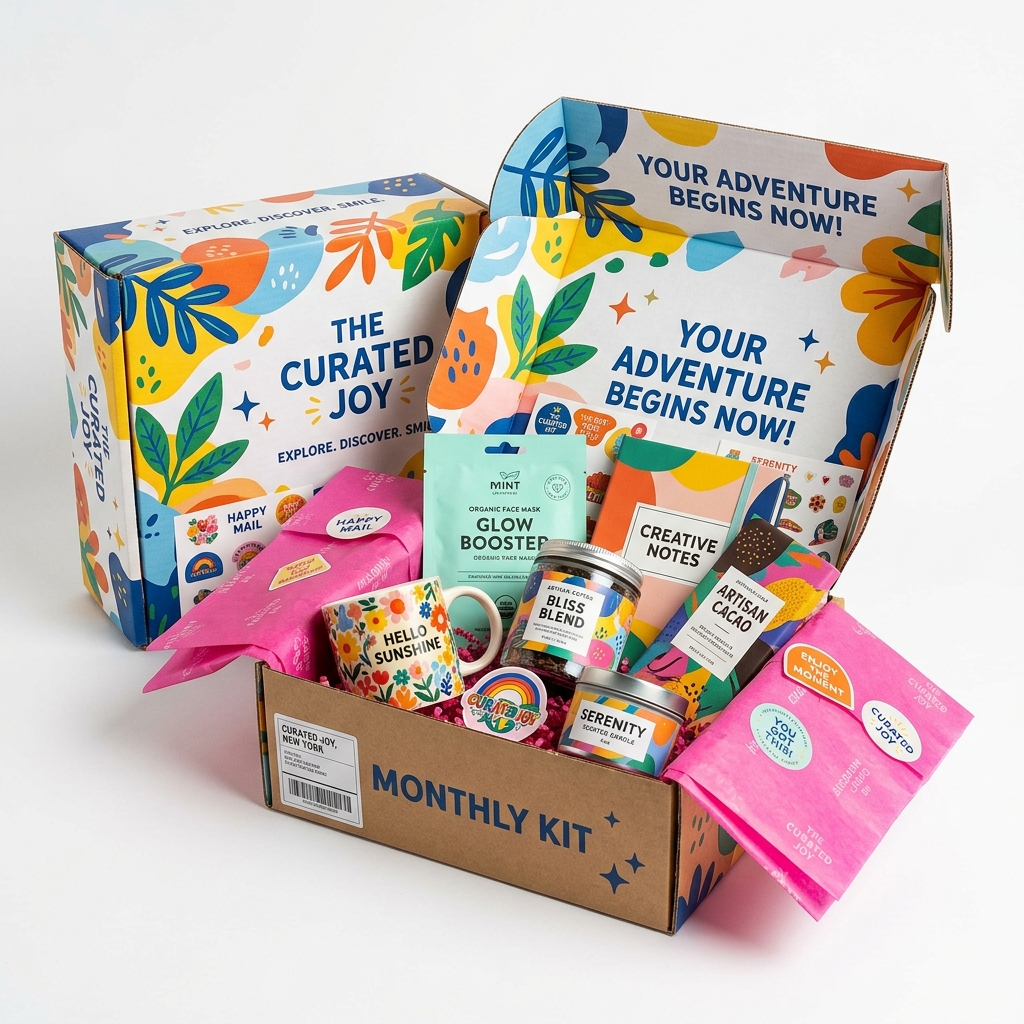
Custom Box Minimum Order Quantities Explained
Why packaging minimums exist, where the price tiers actually step, and how to get branded boxes at 50 to 100 units without paying prototype prices.
“What’s your MOQ?” is the first question most new packaging buyers ask, and the answer is usually more negotiable — and more structural — than it sounds.
Why minimums exist at all
A print run has fixed costs that do not care how many boxes come off the end: making the cutting die, mounting plates, bringing the press up to colour, and running waste sheets until registration is right. On a traditional press that make-ready can consume several hundred sheets before the first sellable box appears.
Spread those fixed costs over 10,000 boxes and they disappear into the unit price. Spread them over 50 and each box carries a share of them that dwarfs the cost of the board.
That is the whole of it. Minimums are not gatekeeping; they are the point at which a box stops costing more to set up than it costs to make.
What digital printing changed
Digital presses have no plates and effectively no make-ready. That single fact is what made low-minimum custom packaging possible: 100 boxes now costs roughly the same per unit to set up as 1,000.
The trade-off is that digital per-unit cost stays flat as volume rises. Past a couple of thousand units you are paying a click charge that plate-based printing would have amortised away. This is why the sensible path is digital at low volume and a switch to flexographic or offset once you cross the threshold — a switch that costs nothing if your supplier kept your dieline and colour standard on file.
Our actual minimums
| Format | Minimum | Why |
|---|---|---|
| Rigid boxes | 50 | Tooling-light; wrapping is partly manual, so scale matters less |
| Magnetic closure boxes | 50 | Same rigid production route |
| Display boxes | 50 | Deliberately low so you can trial in a few stores |
| Mailer boxes | 100 | Digital corrugated; one cutting die per size |
| Folding cartons | 100 | Digital sheet, glued seam |
| Food-grade formats | 100 | Barrier board minimum run |
| Wholesale tier | 250 | Entry point for volume pricing |
Prototype runs of 25–50 units are possible on some formats at a higher unit price. They are useful for photography, trade shows and investor samples, and uneconomical for actual selling.
Where the price actually drops
Unit price does not fall smoothly. It steps, and the steps sit at predictable places:
- 250 units — the entry wholesale tier
- 500 units — better board purchasing
- 1,000–2,500 units — the digital-to-flexo crossover; usually the single biggest drop
- 5,000 units — plates fully amortised
- 10,000 units — board bought by the roll rather than the sheet
- 25,000+ units — best available pricing
If you are near a threshold, ask what the next tier costs. Going from 900 to 1,000 units frequently reduces the total invoice, not just the unit price.
How to work with minimums when you are small
Buy one size, not five. Find the size that covers 70–80% of your orders and start there. A single well-chosen mailer beats a fragmented order across four sizes you will not get through.
Brand the cheap layer first. A printed sticker and custom tissue over a plain kraft box delivers most of the perceived-value effect at a fraction of the spend. Move to printed boxes when volume justifies it.
Use a neutral box plus versioned sleeves. If you have many variants — scents, flavours, seasons — order one structural box at a higher, cheaper quantity and version it with printed sleeves or belly bands.
Combine formats into one order. Ordering a mailer, a carton and a shipper in the same production window usually qualifies for a combined tier rather than three small-run prices.
Ask about scheduled release. For larger commitments we can produce the full run once at the volume price and ship it in monthly instalments, so you get the pricing without needing the warehouse space.
Questions worth asking any packaging supplier
- What is the minimum per size and per artwork, not just per order?
- Is there a plate or setup charge, and is it repeated on reorders?
- Where is the crossover from digital to plate-based printing for my format?
- Do you keep my dieline and colour standard on file for reorders?
- What is the over/under-run tolerance, and am I invoiced on ordered or delivered quantity?
That last one catches people out. Corrugated and carton manufacturing carries a standard commercial tolerance of about ±5% on runs above 1,000 units. Reputable suppliers invoice for what is actually delivered; less reputable ones invoice for what was ordered.
The short version
Minimums exist because setup costs are real, and digital printing has pushed them down to 50–100 units for most formats. Start with one size at the minimum, keep your specification on file, and step up through the tiers as your volume genuinely justifies it.
If you are ordering for the first time, our small business packaging guide covers the low-minimum options in detail, or you can browse every box format we make with its minimum and lead time listed.