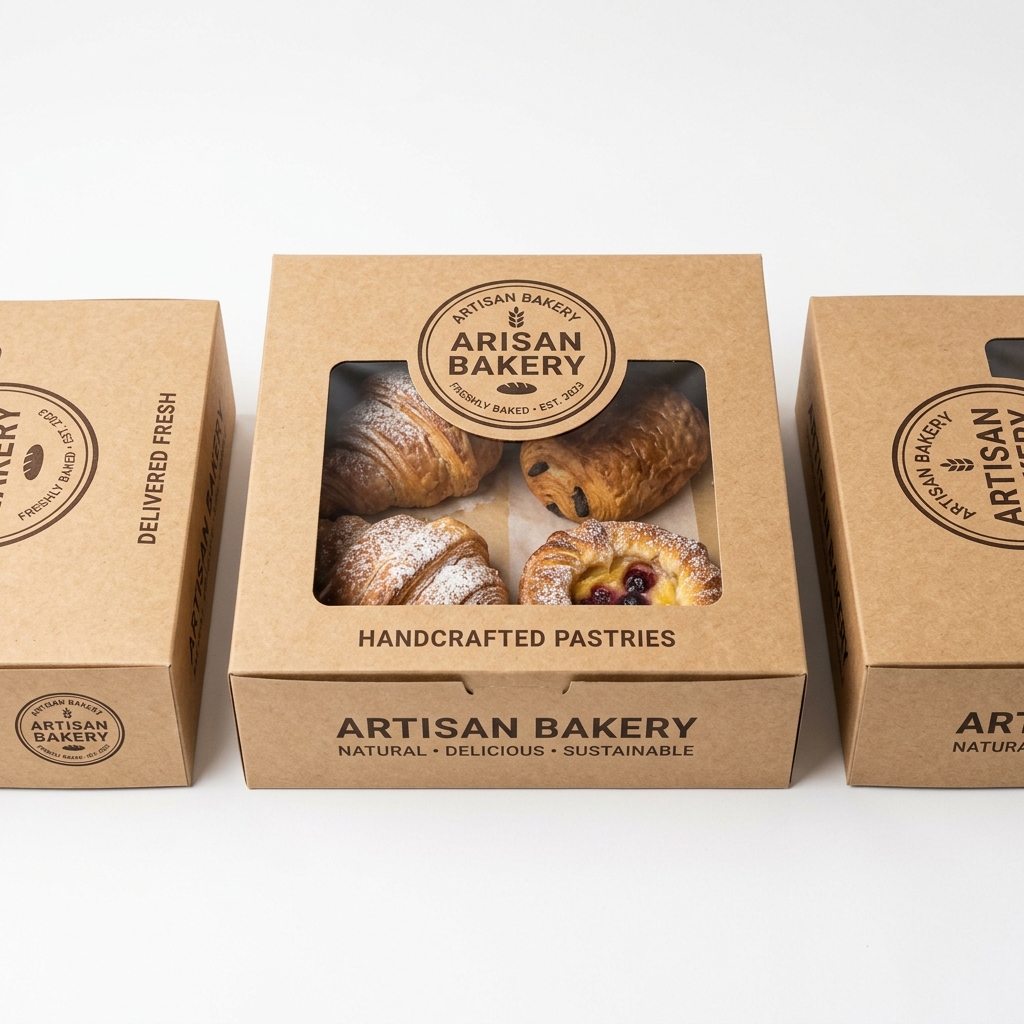
PFAS-Free Food Packaging Rules by Market
PFAS grease-proofing is being restricted across every market we serve. What the rules cover, what the alternatives do, and how to specify compliant packaging.
For decades the standard way to stop grease soaking through a pizza box or a pastry carton was a fluorochemical treatment. Per- and polyfluoroalkyl substances (PFAS) work extremely well and persist in the environment more or less indefinitely, which is why they are now being restricted for food-contact use across North America and Europe.
If you buy food packaging, this affects your specification. Here is what you need to know.
What PFAS were doing in your packaging
Paper and board are naturally absorbent. Butter, oils and hot fats migrate through untreated fibre within hours, leaving translucent patches that make fresh product look stale and eventually weaken the board.
PFAS treatments create a surface barrier that repels both grease and water at very low coating weights, without changing how the board folds, prints or recycles. Nothing else does all of those things quite as cleanly, which is why the material became ubiquitous in bakery boxes, pizza boxes, takeaway containers and microwave popcorn bags.
The regulatory position
The direction of travel is consistent across our 24 markets, even though the mechanisms differ.
United States. There is no single federal ban, but the FDA secured voluntary market phase-outs of grease-proofing PFAS in food contact, and a growing list of states — including California, New York, Washington, Minnesota, Colorado, Maine and Vermont — have enacted their own prohibitions on intentionally added PFAS in food packaging. In practice, if you sell nationally you have to assume the strictest state rule applies.
United Kingdom. PFAS are regulated under UK REACH, with restriction proposals progressing and retailer specifications typically moving faster than legislation. Most major UK grocery and foodservice buyers already require PFAS-free declarations from packaging suppliers.
Canada. PFAS have been assessed as a class under CEPA, with federal action on the class underway and food-contact applications squarely in scope.
Australia. Food-contact materials sit under the Food Standards Australia New Zealand (FSANZ) code, and PFAS are being phased out under the national PFAS NEMP framework, with import restrictions on certain PFAS taking effect. As in the other three markets, the commercial reality is running ahead of the legislation — major grocery buyers are already asking suppliers for PFAS-free declarations.
The practical conclusion is the same in all 24 markets: specify PFAS-free now. Retrofitting a compliant specification after a retailer audit or a state deadline is far more disruptive than starting with one.
This is a summary for packaging buyers, not legal advice. Regulations change; confirm current requirements for your specific product and markets with a qualified adviser.
What replaces PFAS
There is no single drop-in substitute. The right alternative depends on what the food does to the board.
Clay-coated / kaolin-coated board. A mineral coating that gives moderate grease resistance and an excellent print surface. Fine for dry and lightly greasy goods — cookies, dry pastries, cookie boxes — and it recycles normally.
Water-based dispersion barriers. Acrylic or styrene-butadiene coatings applied to the board surface. Good grease and moisture resistance, repulpable in most mills, and now the mainstream PFAS replacement for bakery and takeaway packaging.
Bio-based barriers. Coatings derived from chitosan, alginate or modified starch. Performance is improving quickly; cost and availability still lag the dispersion coatings.
PE or PLA film lamination. Excellent barrier performance, but it takes the pack out of the kerbside paper stream unless the mill has repulping capability. Use it where the barrier requirement genuinely demands it, not by default.
Design changes. Sometimes the cheapest answer is structural: a greaseproof paper liner inside an untreated carton, or a vented design that lets steam escape so condensation never forms in the first place.
Matching the barrier to the food
| Food type | Barrier needed | Typical specification |
|---|---|---|
| Dry cookies, biscuits, confectionery | Minimal | Standard food-grade SBS |
| Cakes, iced pastries | Light grease + moisture | Clay-coated board |
| Buttery pastries, croissants | Moderate grease | Water-based dispersion coating |
| Hot pizza, fried food | High grease + heat + steam | Dispersion coating plus vents |
| Wet or saucy food | High moisture | PE-free laminate or an inner liner |
Over-specifying is a real cost. A dispersion barrier on a dry-cookie carton adds price and adds nothing.
What to ask your supplier
- “Is this specification PFAS-free, and can you supply a declaration?” A supplier who cannot produce a written declaration is not a supplier you want when a retailer audits you.
- “What is the barrier chemistry?” “PFAS-free” is a negative claim. Ask what is actually doing the work.
- “Is it repulpable?” Some replacements keep kerbside recyclability, others do not. Know which you have bought.
- “Is it certified for direct food contact in my markets?” FDA, UK/EU food-contact and Health Canada requirements are not identical.
- “Does it change how the board prints and folds?” Some barrier coatings affect ink adhesion and crease performance, which matters at design stage rather than after the first run.
What we specify
Every food-contact format we produce is quoted PFAS-free by default:
- Custom bakery boxes — clay-coated or dispersion-coated depending on contents
- Custom pizza boxes — dispersion barrier with engineered steam vents
- Custom cake boxes — food-grade SBS at 450 gsm with a moisture-tolerant interior
- Custom cookie boxes — sealed, unvented, with an optional inner barrier bag
- Custom gable boxes — grease-resistant interior where the contents require it
- Custom can packaging — wet-strength board for chilled and condensation-heavy use
Tell us what goes in the box — dry, greasy, hot, wet — and we will specify the lightest barrier that actually does the job, with the compliance documentation to go with it.