Rigid vs Folding Carton vs Corrugated Boxes
Three board families, three different jobs. Comparing cost, strength, print quality, freight and lead time so you pick the right construction first time.
Almost every packaging decision starts with the same fork: rigid, folding carton or corrugated. They look interchangeable in a catalogue and behave nothing like each other in practice.
Here is how they differ on the dimensions that actually matter.
The three constructions
Corrugated is fluted board — a wavy medium glued between two liners. The arches give stiffness and cushioning for very little weight. It is the only one of the three genuinely engineered for transit.
Folding cartons are single-layer paperboard, typically 300–450 gsm, printed flat, die-cut, creased and glued along one seam. They ship flat and erect at pack-out. This is the world’s dominant retail packaging format.
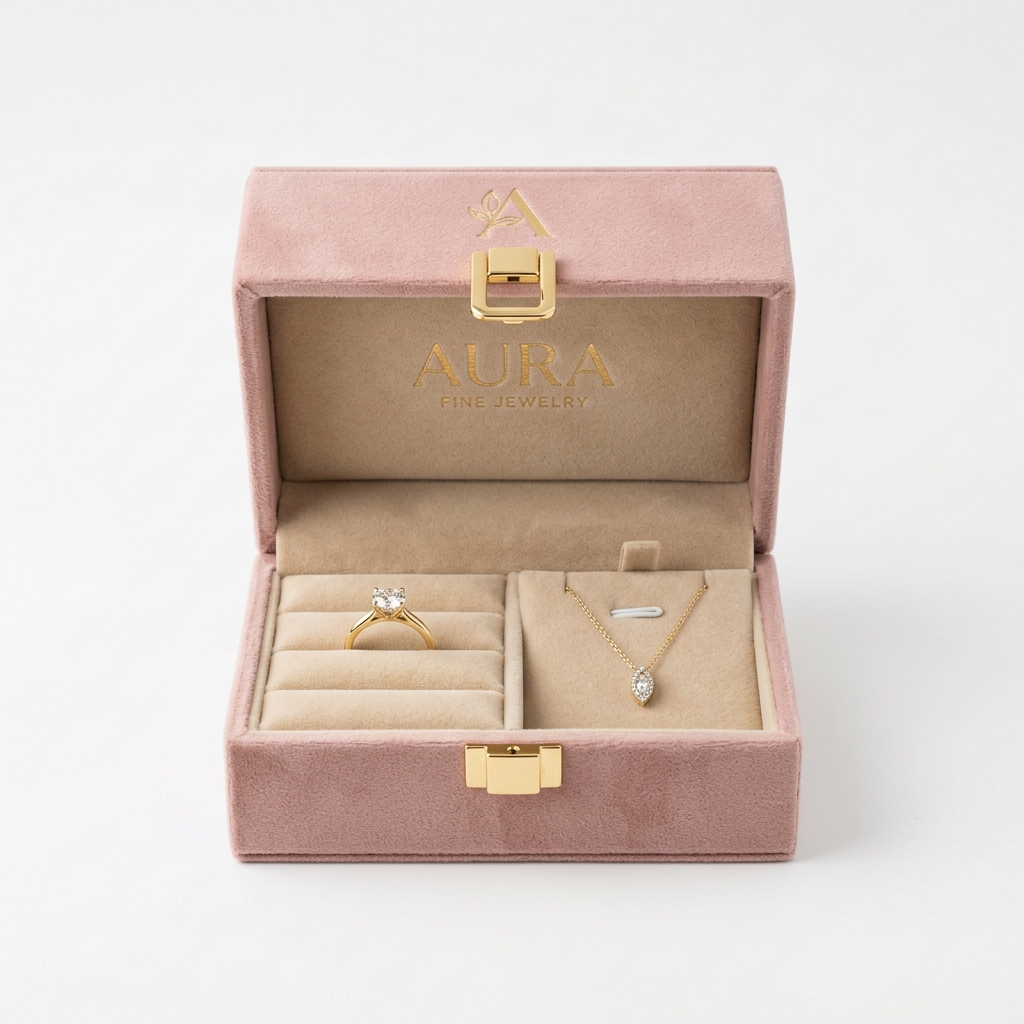
Rigid boxes (set-up boxes) are built from thick greyboard, 1.2–3 mm, cut, cornered and wrapped in printed paper. They do not fold flat and they hold their shape permanently.
Head to head
| Corrugated | Folding carton | Rigid | |
|---|---|---|---|
| Wall thickness | 1.5–7 mm | 0.3–0.6 mm | 1.2–3 mm |
| Transit protection | Excellent | Poor | Moderate |
| Print quality | Good to excellent | Excellent | Excellent |
| Perceived value | Functional to good | Good | Highest |
| Unit cost | Low | Lowest | Highest |
| Ships flat | Yes | Yes | No (unless collapsible) |
| Typical MOQ | 100 | 100 | 50 |
| Lead time | 8–12 days | 8–12 days | 12–18 days |
| Freight cost | Low | Lowest | High |
When to choose corrugated
Choose it when the box has to survive something. Parcel networks, pallet stacking, long transit, heavy or fragile contents. Corrugated is also the only family where the strength is specified numerically — flute profile plus an Edge Crush Test rating — so you can match the board to a real load rather than guessing.
Its ceiling is refinement. Even E-flute with litho-lamination does not feel like a rigid box in the hand.
Typical formats: mailer boxes, shipping boxes, subscription boxes, display packaging, pizza boxes.
When to choose a folding carton
Choose it when the box sells the product rather than protecting it. Folding cartons have the best print surface per dollar of any construction, ship and store flat, and cost less than anything else per unit at volume.
Their limit is strength. A carton holding more than about 500 g needs a glued crash-lock base, and no carton survives a parcel network unprotected — it goes inside a shipper.
Typical formats: product boxes, folding cartons, tuck end boxes, soap boxes, perfume boxes.
When to choose rigid
Choose it when the package is part of the product. Rigid boxes are what phones, fine fragrance, spirits and jewellery ship in, because the solid board resists crushing, the lid closes with a controlled resistance customers read as quality, and the box gets kept rather than recycled.
Their limits are freight and lead time. A rigid box occupies its full volume from the factory onward, so shipping cost can rival unit cost on large orders — which is what collapsible magnetic construction exists to solve.
Typical formats: rigid boxes, magnetic closure boxes, gift boxes, shoe boxes.
The combinations that work
Most mature packaging programmes use two or three of these together:
- Folding carton inside a corrugated shipper. The standard retail-plus-ecommerce setup. The carton sells on shelf; the shipper survives the parcel network.
- Rigid box inside a corrugated mailer. Protects the wrap from scuffing in transit while preserving the unboxing moment.
- Corrugated tray inside a printed sleeve. A sleeve construction that gets most of the rigid effect at carton prices, and versions cheaply across a product range.
A decision sequence that works
- Will it travel through a parcel or freight network on its own? If yes, corrugated — or a shipping-ready construction. If no, continue.
- Is the box the primary retail package the customer picks up? If yes, folding carton unless the price tier justifies more.
- Is the product above roughly $80 retail, or is it a gift? If yes, evaluate rigid. Run the freight numbers before committing.
- Do you have many variants? Consider a neutral structure plus printed sleeves rather than separate printed boxes.
- What is the real order volume this year? Below 500 units, digital printing makes any of the three viable. Above 5,000, the cost gap between them widens sharply.
Sustainability, briefly
Corrugated has the strongest recycling story of the three, recovered at over 85% across North America and Europe. Uncoated folding cartons recycle well too. Rigid boxes are the weakest case: the greyboard core is recycled material, but soft-touch lamination, foil and magnets all reduce recyclability. If a plastic-free rigid box matters to you, ask for a paper wrap with a water-based coating and a ribbon closure rather than magnets.
Still unsure
Send us the product dimensions, packed weight, retail price point and how it reaches the customer. We will tell you which construction fits and, just as usefully, where you would be over-specifying. Every format we make is listed with its minimum, lead time and price on the box types page.