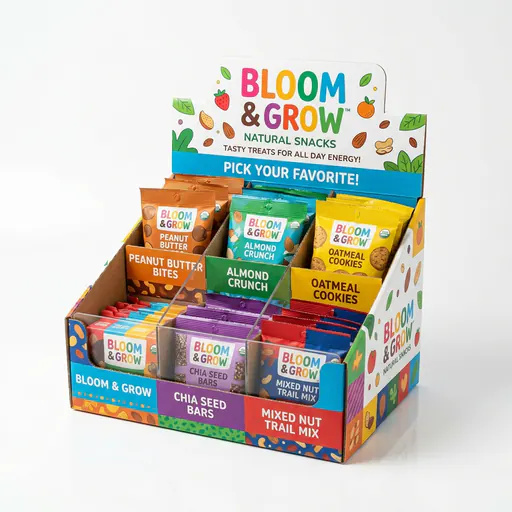
Retail Boxes for Shelves, Pegs and Counter Displays
Choose a retail carton for its display position, opening method, scan surface and replenishment process.
Start a retail box brief with where the customer sees and takes the product. A shelf carton, peg-hung pack and counter dispenser face different loads and give the artwork different visible panels.
Choose the display format
A standing carton needs a base that remains level at the packed weight. Choose between tuck, manual snap lock and pre-glued auto bottom based on how operators form and fill it.
A peg-hang carton needs a tested hang slot and enough board above it. Locate the slot relative to the loaded center of mass. If the box leans, adjust the support or slot location with a physical sample.
For dispensing display boxes, size the opening to the actual wrapper. Test with a full stack and one unit left. A roll-end display tray can suit multiple products where staff need to restock quickly.
Check the artwork with the box in place
Print product identification and variable codes on a panel that remains visible. Keep the barcode away from fold lines, textured decoration and glue areas. Scan a finished sample on the intended shelf or counter if possible.
If a window shows the product, check the remaining frame with the real weight inside. For a blind box for collectibles, use an opaque panel and avoid revealing the variant through its silhouette or print.
Approve the packing and restocking sequence
Close and open the carton during a short packing trial. Time the tear-off or folding step, and check that the remaining tray still stands with the last unit inside. Take the shelf dimensions, hook details and loaded weight to the custom retail packaging range when choosing the final format.
Choosing a retail display box is one of our packaging guides fromCustom Boxes, written to help you specify custom hanger boxes and every other format in our range of custom box types.