
Custom ecommerce packaging
Custom ecommerce packaging is printed packaging designed to ship products directly to customers and to create a branded unboxing when they arrive. It has to survive parcel networks, keep shipping costs down and turn the delivery into a moment customers remember.

Recommended packaging styles
Explore the box styles in this range, then choose the dimensions, board and finish for your product.

Custom Shipping Boxes
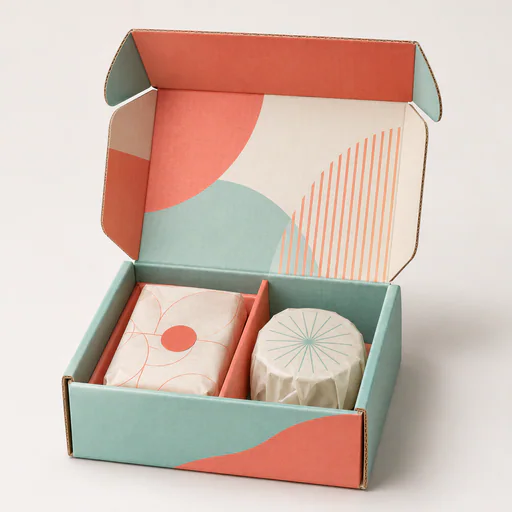
Custom Subscription Boxes
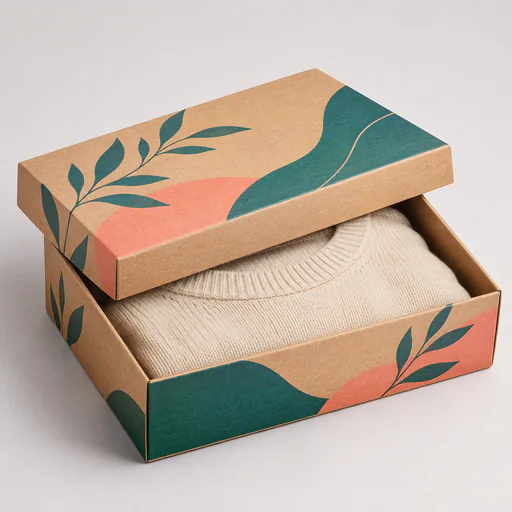
Custom Apparel Boxes
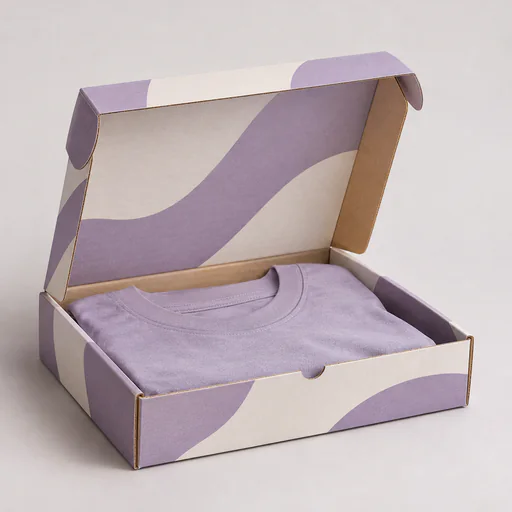
Custom T-Shirt Boxes
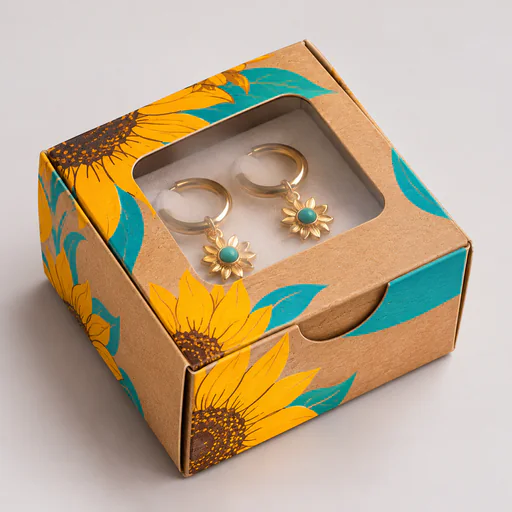
Custom Small Boxes

Custom Corrugated Boxes
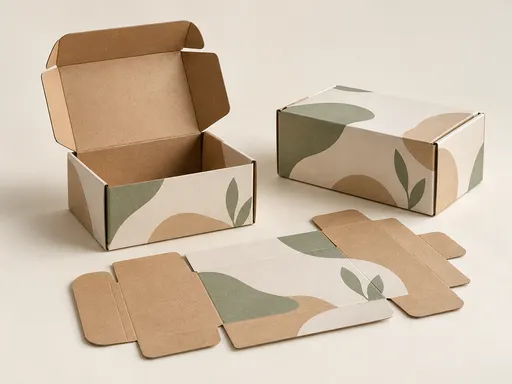
Custom Cardboard Boxes
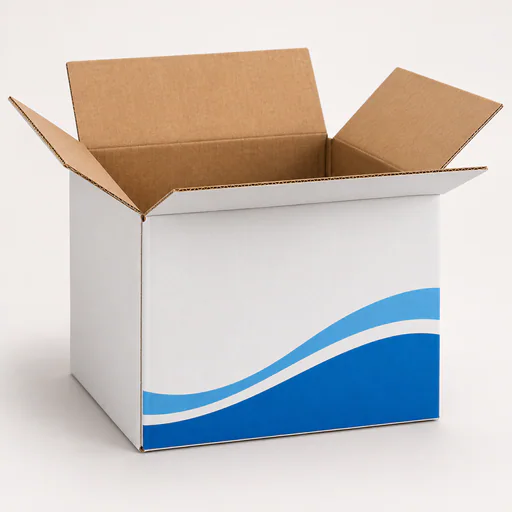
Custom White Shipping Boxes
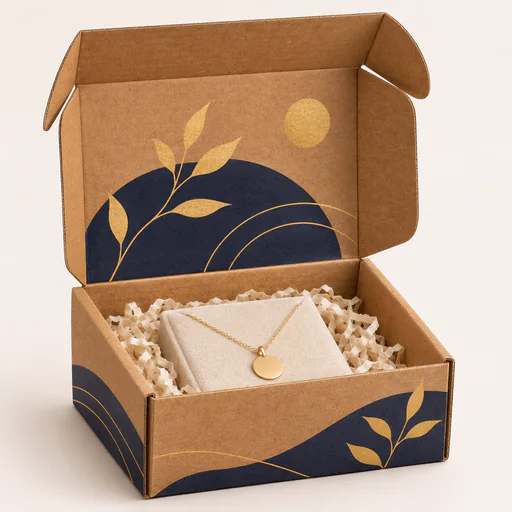
Custom Kraft Mailer Boxes
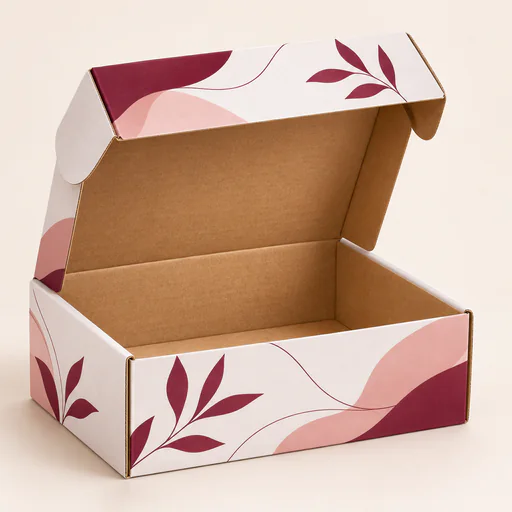
Custom White Mailer Boxes
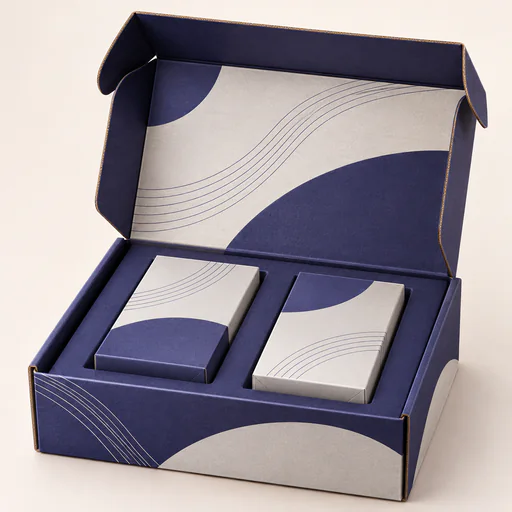
Custom Luxury Mailer Boxes
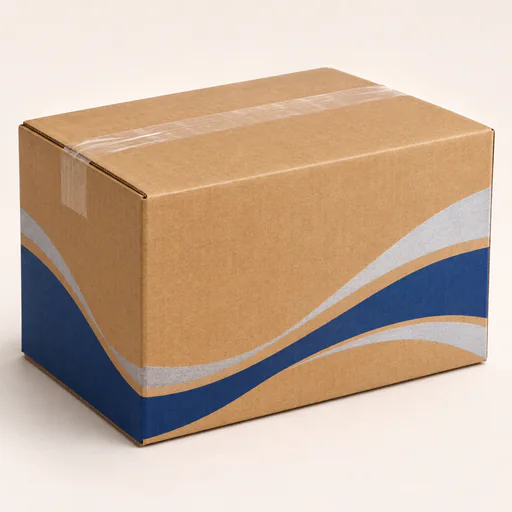
Custom Amazon FBA Boxes
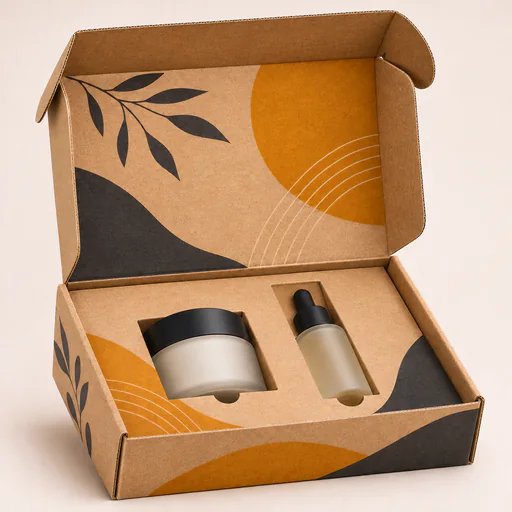
Custom PR Mailer Boxes
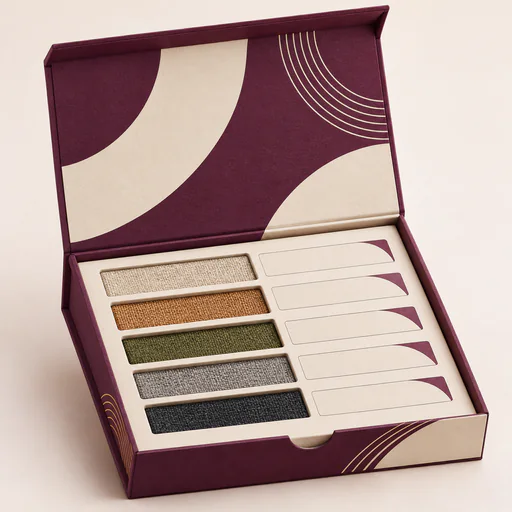
Custom Sample Kit Boxes
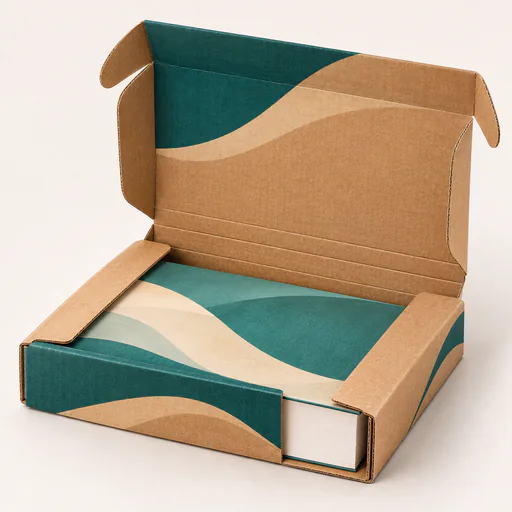
Custom Book Mailer Boxes
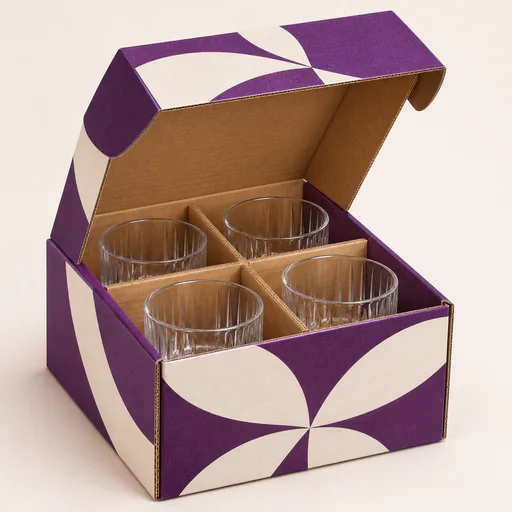
Custom Glassware Boxes
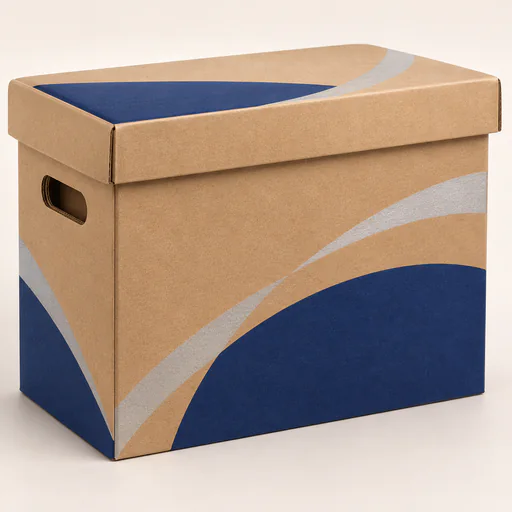
Custom Document Boxes
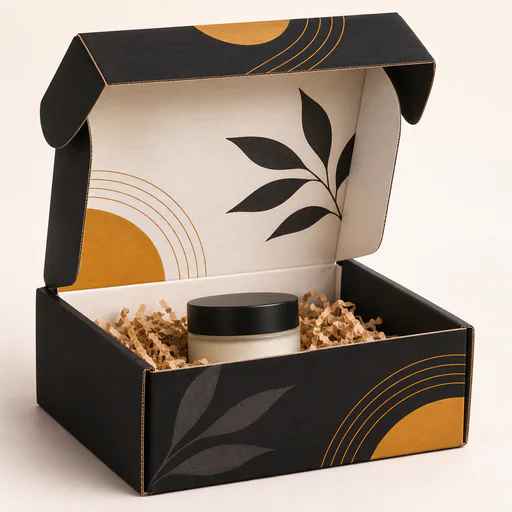
Custom Black Mailer Boxes
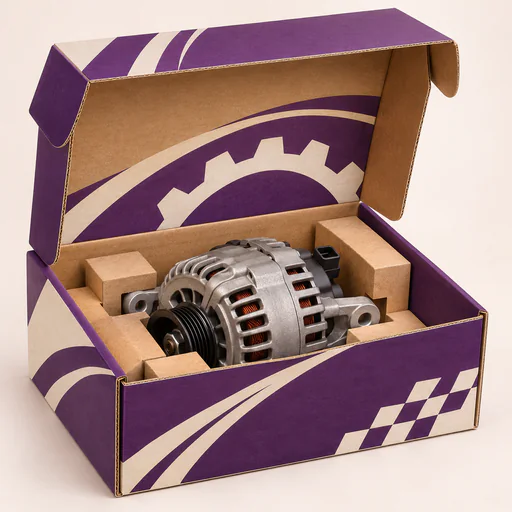
Custom Automotive Parts Boxes
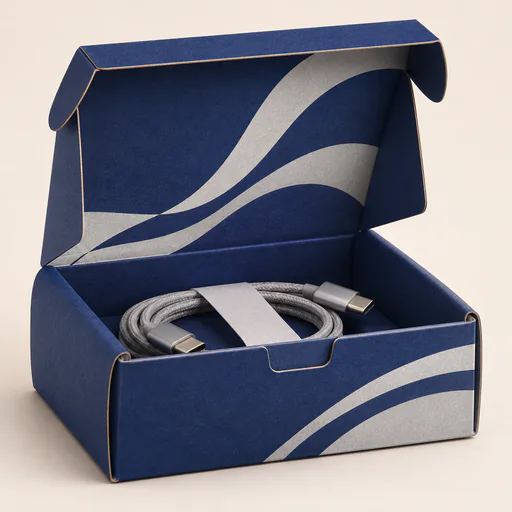
Custom Roll-End Front Tuck Boxes
Materials and options
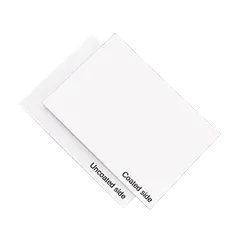
Coated paperboard
A smooth surface for full-color artwork on folding cartons and sleeves.
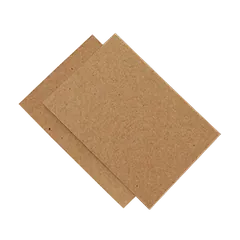
Kraft board
A natural finish for printed cartons. Check how your ink looks on the brown stock.

Foil stamping
Add a metallic detail to a logo or motif. Use a proof to check fine lines and placement.
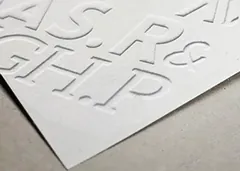
Embossing
Raise a detail on the surface. Confirm that it clears inserts and creases.
Compare every board, coating, finish and add-on in the packaging Option Library.
Buying guide
Protection, cost and unboxing
Ecommerce boxes are thrown, stacked and dropped many times before they reach a doorstep, so corrugated board is the default: E-flute mailers for most products and stronger shipping boxes for heavy orders.
Carriers bill by dimensional weight, so a box cut to your product saves money on every order. Inside print and a fitted insert then turn the opening into part of the brand.
Choosing a format
Mailer boxes fold without tape and look premium on arrival. Shipping boxes are cheapest per cubic inch and best for heavy or multi-item orders, and there are specialist boxes for apparel, t-shirts, subscriptions and small products.
Most ecommerce brands use two or three sizes that cover most of their orders, which keeps stock simple and shipping costs low.
Plan for Shopify, Etsy and fulfillment-center orders
For a Shopify or Etsy order packed by your team, start with the actual item combinations, carrier labels and return opening. A close-fitting mailer can hold a retail carton, while a fitted insert can support an item sold without one. Print only what the buyer needs on the outside and leave a flat label area.
A fulfillment-center inbound shipment has a separate outer case and shipment identifiers. Keep branded sellable units separate from the inbound case specification. Verify current program and carrier requirements before ordering the printed pack.
Build a box range from real orders
List the order combinations shipped most often and measure the packed length, width and height of each, including inserts. Start with the smallest structure that gives the contents suitable protection. Test borderline orders in both sizes before adding another footprint.
Carrier charges can use exterior dimensions as well as actual weight. Compare the outside measurements of each completed pack. A thick wall, raised lid or extra void fill can put a carton in a different freight band even when its advertised inside size matches.
Balance packing speed, print and damage protection
A mailer gives a wide inside lid for a message, while a taped shipper can suit larger orders and heavier inventory. If you use a presentation case inside a parcel, protect the decorative surface with a fitted outer and keep the shipping label on the outer pack.
Run a trial at the packing bench. Record assembly time, where the label goes and how often operators need extra fill. Open the test packs after handling, inspect vulnerable corners, and review any changes to inserts before ordering at scale.
Guides for this range
- Testing a shipping box for damage
- Comparing box costs by structure
- Designing a subscription box layout
Custom Ecommerce Packaging is one part of the range made by Custom Boxes. Compare every format on the custom box types page, or browse packaging by industry.
Custom Ecommerce Packaging questions
Mailer box or shipping box?
Mailers fold without tape and look premium; shipping boxes cost less per cubic inch and suit heavy orders.
How do I cut my shipping costs?
Use the smallest box that fits each order with light padding, which keeps dimensional weight down.
Can I print inside an ecommerce box?
Yes. Inside print is produced in the same run and is the most popular unboxing upgrade.