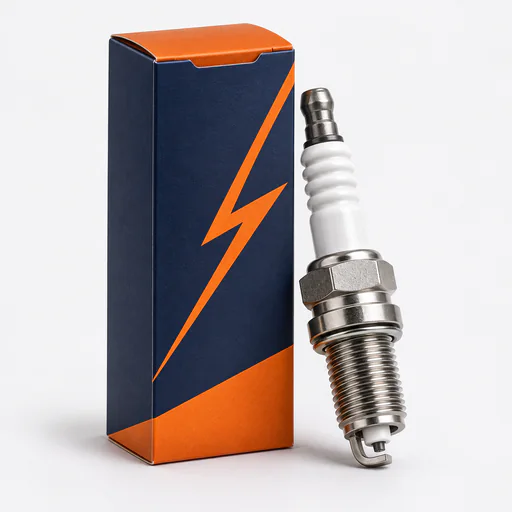
Automotive Parts Packaging
Automotive cartons protect replacement parts and accessories using fitted supports around their strongest surfaces. Choose the box with the part weight, projections and distribution route in mind.
Automotive parts packaging protects heavy, oily and often sharp-edged parts, and helps a parts counter or warehouse find the right one quickly. The box has to carry the part number clearly, survive handling in stock rooms and protect threads, sensors and finished surfaces.
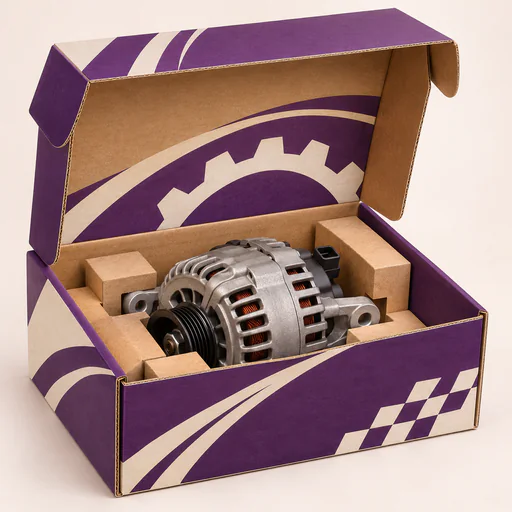
Folding cartons suit small parts such as spark plugs and filters; corrugated boxes with inserts suit heavier parts. Clear labeling panels matter as much as the brand artwork.
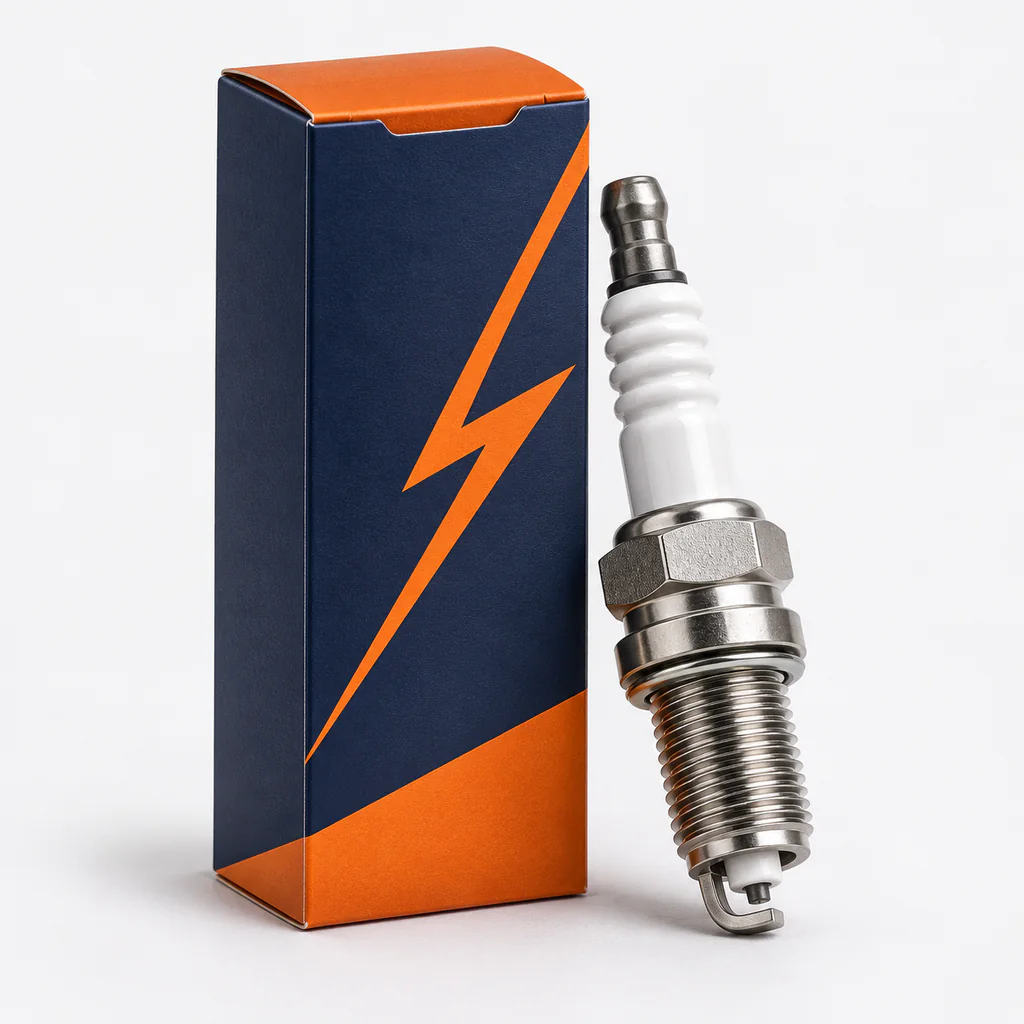
Recommended packaging styles
Explore the box styles in this range, then choose the dimensions, board and finish for your product.


Materials and options
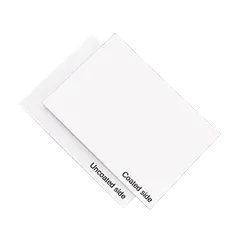
Coated paperboard
A smooth surface for full-color artwork on folding cartons and sleeves.
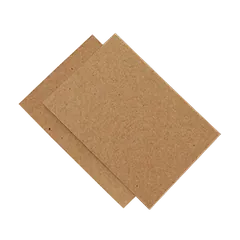
Kraft board
A natural finish for printed cartons. Check how your ink looks on the brown stock.

Foil stamping
Add a metallic detail to a logo or motif. Use a proof to check fine lines and placement.
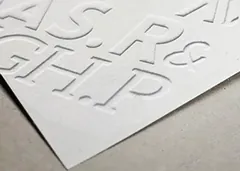
Embossing
Raise a detail on the surface. Confirm that it clears inserts and creases.
Compare every board, coating, finish and add-on in the packaging Option Library.
Buying guide
Restrain the part before adding board weight
Hard edges and threads can pierce a panel even in a thick box. Support the component at known contact points and prevent movement in each direction. Keep finished surfaces and fittings clear of abrasion.
Use the actual mass and center of gravity to lay out lifting points. Make sure any spare hardware is packed independently.
Keep fitment and part numbers accessible
A readable end panel helps stockroom staff identify the correct part without opening. Compare print contrast against the actual board, and reserve a flat spot for labels that vary by SKU.
Check carrier restrictions separately if an item includes a battery, fluid or pressurized component. Test the complete assembled pack for the intended route.
Protect the critical surfaces
Identify the parts of the product that must not be damaged, such as threads, electrodes, sensors or machined faces, and design the insert so they do not touch the board.
For heavy parts, choose the corrugated grade from the packed weight and test a filled sample by dropping it gently on a corner.
Make the part easy to identify
Put the part number and fit information on at least two panels, so it can be read on a shelf from either side. Leave space for a barcode label if your system applies one.
Keep the design simple and consistent across the range so the counter staff recognize the brand and the part type at a glance.
Guides for this range
Automotive Parts Packaging is one part of the range made by Custom Boxes. Compare every format on the custom box types page, or browse packaging by industry.
Automotive Parts Packaging questions
Can one insert fit several vehicle models?
Test the dimensional range and the heaviest configuration. Use changeable stops only when the part stays restrained.
Is a printed shelf box enough for carrier shipping?
A separate corrugated outer or a transit-designed pack may be needed. Check the loaded configuration.